
Home / Physical Rehabilitation
Physical rehabilitation in Corpus Christi
One-to-one therapy for pain, stiffness, weakness and balance — aimed at getting a specific function back, not at filling a course of sessions.
The short answer
Corpus Pain & Health provides physical rehabilitation in Corpus Christi, Texas at 4639 Corona Drive, Suite 45. Our rehabilitation clinicians treat back and neck pain, shoulder and elbow conditions, post-surgical stiffness, balance and fall risk, and movement problems following neurological injury.
Each plan starts from a goal you name — climbing stairs without holding the rail, sleeping through the night, returning to work. Call (361) 226-4600 to arrange an evaluation.
Or email frontdesk@corpuspainandhealth.com
5.0Google rating across 72 reviews
2,500+Patients treated in Corpus Christi
1-to-1You work with a clinician, not a sheet of exercises
Sat 9–2Weekend appointments available
What does physical rehabilitation treat?
Physical rehabilitation addresses how you move. When pain, injury, surgery or illness changes the way a joint or muscle works, therapy retrains that movement rather than masking the symptom.
Shoulder and arm
- Frozen shoulder (adhesive capsulitis)
- Shoulder impingement
- Tennis elbow (lateral epicondylitis)
- Golfer's elbow (medial epicondylitis)
- Post-surgical shoulder stiffness
- Limited range of motion and capsule tightness
Spine and pain
- Back pain in Corpus Christi patients of all ages
- Neck pain and postural strain
- Pinched nerves
- Chronic pain conditions including fibromyalgia
- Neuropathy and nerve-related pain
- Complex regional pain syndrome
Balance and neurological
- Balance training and fall prevention
- Vertigo and dizziness affecting movement
- Recovery after stroke
- Parkinson's disease
- Traumatic brain injury and concussion
- General deconditioning and weakness
How long does rehabilitation take to work?
Most people notice some change within three to four weeks of starting. A full course commonly runs six to twelve weeks, depending on what is being treated and how long the problem has been present.
Three things move that timeline more than anything else:
- How long you have had the problem. A shoulder stiff for three months responds faster than one stiff for three years.
- Whether the home program gets done. Clinic sessions direct the recovery; the work between them is what produces it.
- What else is going on. Diabetes, thyroid conditions and inflammatory disease all affect healing, which is why they are asked about at the evaluation.
Some conditions follow their own clock regardless. Frozen shoulder, for example, moves through predictable phases and therapy works with that timeline rather than overriding it.
What happens in a rehabilitation session?
A session is active. You should expect to be working for most of it rather than lying under a machine.
- Check-in. What has changed since last time, what aggravated it, how the home program went.
- Hands-on work. Joint mobilization and soft tissue techniques to create movement that is not available yet.
- Loaded exercise. Using that new range under control, which is what makes the change stick.
- Progression. The home program is updated so it stays slightly ahead of what you can already do comfortably.
Sessions typically run 45 minutes to an hour. Wear clothing that allows access to the area being treated and that you can move freely in.
Do you need a referral for rehabilitation?
Often not. Many patients book directly with a rehabilitation clinician in Corpus Christi without seeing another provider first. What your insurance plan will cover is the more common limiting factor, and that varies by plan.
Call (361) 226-4600 before booking and the front desk will check your specific coverage, including visit limits and whether authorization is needed. It takes a few minutes and avoids a surprise later.
Balance problems and fall prevention
Falls are one of the clearest cases where therapy is genuinely preventive. Balance declines gradually, so most people only notice after a fall or a near miss — by which point avoiding movement has usually made the underlying weakness worse.
Assessment looks for the reason balance has changed, which may be strength, vestibular function, vision, medication effects, or a combination. Treatment then addresses that reason specifically, alongside strengthening, gait work, advice on walking aids where they help, and practical changes at home.
If you have had a fall in the past year, or find yourself reaching for furniture as you cross a room, that is the point to be assessed rather than after the next one.
Common questions
Does rehabilitation hurt?
It should be uncomfortable at times but not painful. Restoring movement to a stiff joint involves working at the edge of what it can currently do. A good session leaves you tired and perhaps sore the next day, not in more pain than when you arrived. Say so if something hurts — the plan adjusts.
How often will I need to come in?
Commonly three times a week at the start, reducing as you improve and take on more of the program independently. The schedule is set at your evaluation and reviewed as you progress rather than fixed in advance.
What should I bring to my first appointment?
Photo ID, your insurance card, your completed initial paperwork, any referral or imaging you have, a list of current medications, and clothing you can move in. If the injury relates to an accident claim, bring that paperwork and your attorney's details. If your goal involves specific equipment or footwear — work boots, running shoes, a walking frame — bring that too.
Can rehabilitation help after surgery?
Yes, and post-surgical stiffness is one of the more common reasons patients are referred to us. Timing matters, as some procedures have protocols that restrict certain movements early on. Bring your surgeon's instructions so the plan is built around them.
What kind of rehabilitation do you provide?
Hands-on treatment combined with progressive exercise, delivered one to one. Our clinicians draw on manual therapy, therapeutic exercise and modalities such as mechanical traction and electrical stimulation, selected according to what your evaluation finds. The mix is explained to you before treatment starts.
What if I am not improving?
You are re-evaluated and your care plan is changed. Progress is reviewed throughout, and if you are not responding the way the care plan expected, we reassess you, change the care plan, and refer you on for further investigation where that is the right next step. Continuing unchanged with treatment that is not working is not an acceptable outcome.
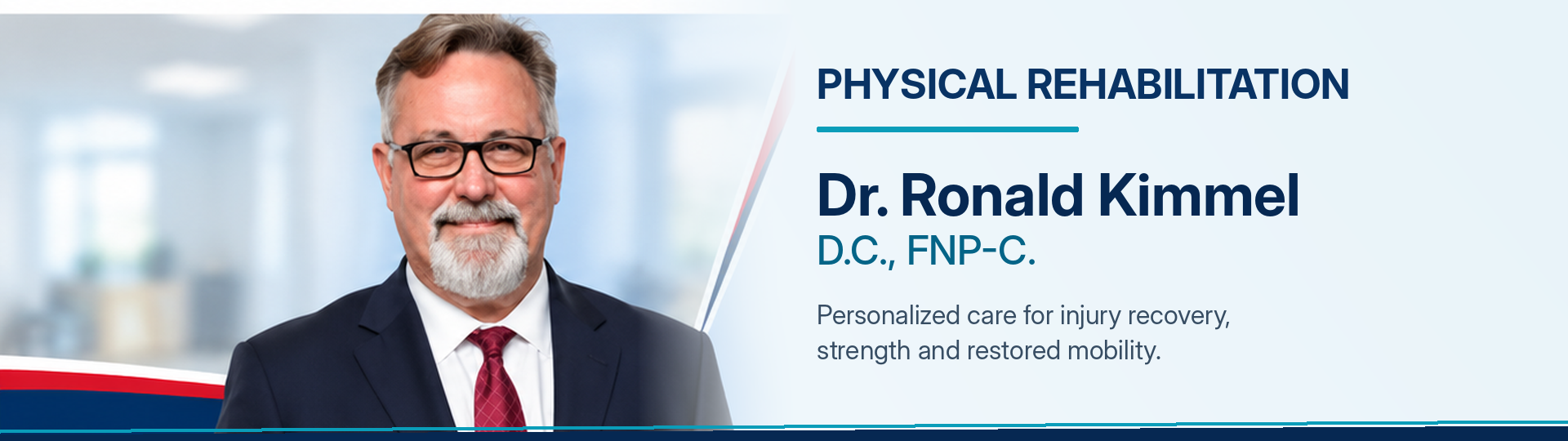
Clinically reviewed by Dr. Ron Kimmel, DC, FNP-C, Corpus Pain & Health, Corpus Christi, Texas. This page is general information about physical rehabilitation and is not a diagnosis or a substitute for individual medical advice. Last reviewed October 2026.
Related
Visit the clinic
We are on Corona Drive, a few minutes from Spohn South and the Moore Plaza area.
Address
4639 Corona Drive, Suite 45
Corpus Christi, TX 78411
Opening hours
| Monday to Friday | 9:00 AM – 7:00 PM |
| Saturday | 9:00 AM – 2:00 PM |
| Sunday | By appointment |